
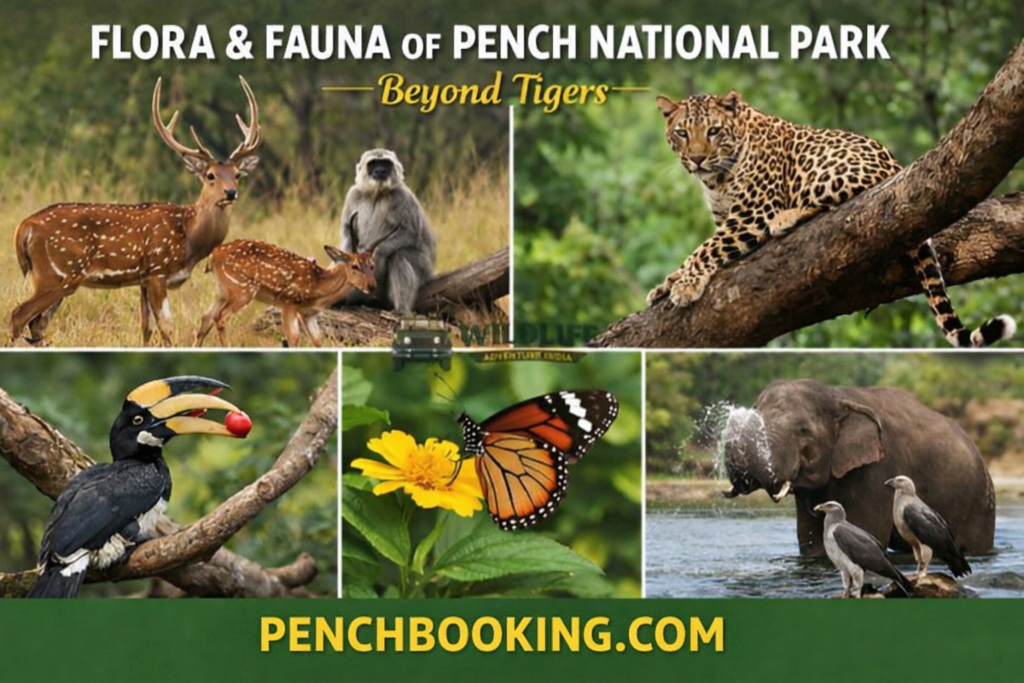
Pench National Park which extends across Madhya Pradesh and Maharashtra ranks among India’s most biodiverse wildlife sanctuaries. The park serves as a vital component of Pench Tiger Reserve which has gained international recognition for its tiger population. The park contains multiple ecosystems which extend beyond its tiger population. The area contains various habitats which include dense forests open grasslands and riverine sections with seasonal waterholes that attract different animal species to their natural environment. All animals in the park including mammals birds reptiles and amphibians and insects contribute to the park’s ecological balance. The study of Pench National Park’s plant life and animal species reveals to visitors the complete picture of how this ecosystem operates.
Pench is a living example of biodiversity conservation, where Pench wildlife thrives naturally, offering visitors a chance to experience the intricate balance of nature. Beyond tiger sightings, the park offers experiences in birdwatching, nature photography, and exploring complex habitats that support life at every level.
Overview of Pench National Park
Pench National Park covers over 750 square kilometers, including its core and buffer zones. It is named after the Pench River, which flows through its heart and nourishes its wildlife. The park forms part of the Satpura hill range, which provides diverse terrain including gently rolling hills, dense forests, and open meadows.
Key highlights of Pench National Park include:
- Declared a tiger reserve in 1992 to protect the tiger population and other wildlife
- Inspired by Rudyard Kipling’s The Jungle Book
- Serves as an ecological corridor connecting central Indian forests
- Home to over 40 species of mammals, more than 300 species of birds, and a variety of reptiles and insects
The combination of diverse habitats and rich vegetation makes the park a perfect destination for wildlife enthusiasts, photographers, and researchers alike. Visitors can witness a fully functioning ecosystem where every species, from apex predators to insects, plays a critical role.
Vegetation and Forest Types
The park’s flora and fauna are supported by a variety of habitats, including tropical dry deciduous forests, riverine forests, and open grasslands. Each forest type supports specific species and contributes to the overall ecological balance.
Major vegetation types include:
- Teak forests: Dominated by Tectona grandis, these forests provide shade, shelter, and nesting sites for birds and mammals. Teak trees also support insects and smaller species that are essential for the food chain.
- Mixed deciduous forests: Include mahua, saja, lendia, dhawda, and haldu trees. These forests produce fruits and flowers consumed by herbivores and birds, sustaining biodiversity.
- Grasslands and meadows: Found near waterholes and forest clearings, these areas are vital for herbivores like chital, sambar, and gaur. Predators often hunt in these areas, maintaining a predator-prey balance.
- Riverine forests: Along the Pench River and seasonal streams, these areas support amphibians, reptiles, and water birds while preventing soil erosion.
The combination of these vegetation types ensures that Pench wildlife has access to food, water, and shelter throughout the year.
Important Flora Species
The flora of Pench National Park is not only ecologically important but also provides resources for wildlife and local communities. Some of the prominent plant species include:
- Mahua: A multipurpose tree that provides flowers and fruits eaten by herbivores; also used by local tribes.
- Bamboo: Supports herbivores and nesting birds, particularly in riverine areas.
- Palas (Flame of the Forest): Known for its vibrant flowers and importance in local ecology.
- Jamun and Amla: Fruit-bearing trees that provide nutrition for mammals and birds.
- Tendu: Used in traditional industries and serves as a food source for insects.
These plants contribute to the park’s ecological health, supporting everything from soil fertility to the survival of higher trophic species.
Mammals in Pench National Park
While tigers are the main attraction, the park’s mammal diversity is impressive. Herbivores form the base of the ecosystem:
- Chital (Spotted Deer): The most abundant prey for tigers, providing a stable food source.
- The sambar deer is a significant game for predators, such as leopards and tigers.
- Nilgai and Chinkara: Agile antelopes that thrive in grasslands.
- Gaur (Indian Bison): Large herbivores that maintain grassland ecology.
- Wild Boar: Opportunistic feeders that contribute to seed dispersal and soil aeration.
Carnivores beyond tigers include:
- Leopards: Solitary predators often found in dense forests.
- Wild Dogs (Dholes): Social pack hunters that maintain prey balance.
- Sloth Bears: Nocturnal species feeding on insects and fruits.
- Smaller predators: Jungle cats, jackals, and foxes help control rodent populations.
The interaction of these mammals ensures a healthy predator-prey balance, which is essential for ecosystem stability.
Birdlife in Pench National Park
Pench National Park is home to over 300 bird species, making it a haven for ornithologists and nature lovers. The diversity of habitats—from dense forests to open meadows and riverine areas—supports a wide range of species.
Notable birds include:
- Crested Serpent Eagle
- Indian Roller
- Grey-headed Fish Eagle
- Malabar Pied Hornbill
- Peafowl and Kingfishers
- Woodpeckers and Owls
Migratory birds also visit the park during winter, adding seasonal diversity. Birds play a crucial role in seed dispersal, pest control, and pollination, highlighting their importance in maintaining Pench flora and fauna.
Reptiles and Amphibians
Reptiles and amphibians are essential components of the park’s ecosystem. The park hosts:
- Indian Python and Monitor Lizards: Predators of small mammals and birds.
- Crocodiles: Found in rivers and waterholes, helping regulate aquatic species.
- Cobras, Kraits, and Vipers: Control rodent populations.
- Frogs and Toads: Abundant during the monsoon; they control insect populations and are indicators of environmental health.
These species maintain balance in the ecosystem and highlight the complexity of Pench wildlife.
Insects and Small Species
Even the smallest creatures are vital for the park’s ecosystem. Butterflies and bees pollinate flowers, ensuring plant reproduction. Termites and ants decompose organic matter, improving soil fertility. Beetles and other insects serve as food for birds, reptiles, and amphibians. Without these smaller species, the ecosystem would lose its stability, demonstrating how every organism, no matter how small, contributes to the overall health of Pench National Park.
Conservation Importance
The Pench Tiger Reserve is more than just a sanctuary for tigers. It preserves complete ecosystems, protects endangered species, maintains forest corridors, and supports ecotourism. Conservation efforts ensure the survival of both flora and fauna, promoting biodiversity while benefiting local communities. Protecting Pench wildlife means maintaining the delicate balance of the entire ecosystem, from the smallest insects to apex predators.
Best Time to Visit
The park is open from October to June. Early morning and late afternoon safaris provide the best chances of wildlife sightings. Winter months are ideal for birdwatching, while pre-monsoon months offer better visibility of animals near waterholes. Monsoon months (July to September) see the park closed, allowing nature to rejuvenate without disturbance.
Frequently Asked Questions (FAQs)
Q1. What makes the flora and fauna of Pench National Park special?
The flora and fauna of Pench National Park are special because the park encompasses multiple ecosystems that support hundreds of species, making it one of the most biodiverse areas in India.
Q2. Is Pench National Park only known for tigers?
No, while tigers are the highlight, Pench wildlife includes deer, leopards, wild dogs, birds, reptiles, and insects, offering a complete ecological experience.
Q3. How does Pench Tiger Reserve contribute to conservation?
The reserve preserves endangered species, maintains forest corridors, promotes ecotourism, and ensures ecological balance across central Indian forests.
Q4. What are the main types of forests in Pench National Park?
Pench has dry deciduous forests dominated by teak, along with mixed forests, riverine patches, and grasslands that support diverse wildlife.
Q5. When is the best time to visit Pench for wildlife?
October to June is ideal, with winter months perfect for birdwatching and summer months offering better animal sightings near water sources.
Conclusion
Pench National Park is a living example of biodiversity in India. Beyond tigers, it is home to rich flora and fauna, from dense teak forests and vibrant bird species to elusive mammals and tiny insects. The Pench Tiger Reserve demonstrates how balanced ecosystems function, highlighting the interdependence of every organism. A visit to Pench allows one to witness this intricate web of life, making it a must-visit for wildlife enthusiasts, researchers, and nature lovers alike.