Nestled in the untamed wilderness of Maharashtra, the Mogarkasa Zone Pench has emerged as one of India’s most fascinating wildlife destinations. Unlike the well-trodden core areas of Pench National Park in Madhya Pradesh, Mogarkasa offers a quieter, more intimate wildlife experience. It is gaining worldwide attention due to the rare presence of the Black Leopard in Pench, also known as the melanistic leopard or Black panther in Pench National Park.
While most visitors focus on tiger sightings in the Madhya Pradesh side of Pench, the Pench Tiger Reserve Maharashtra side — particularly the Mogarkasa Buffer Zone — offers unique opportunities for wildlife enthusiasts, photographers, and researchers alike. The repeated Pench Black Leopard sightings here have transformed Mogarkasa from a quiet buffer forest into a must-visit safari hotspot.
In this comprehensive guide, we explore the ecology, wildlife patterns, safari types, practical tips, and conservation significance of Mogarkasa, giving you everything you need to plan a memorable Pench buffer zone safari.
The Ecological Importance of Mogarkasa Zone Pench
The Mogarkasa Buffer Zone is a vital part of the Pench Tiger Reserve, acting as a transition area between core forests and surrounding human settlements. It plays an essential role in maintaining biodiversity while supporting local communities through eco-tourism.
Diverse Forest Habitat
Mogarkasa features dry deciduous forests dominated by teak and bamboo.
These forests are interspersed with open meadows, seasonal waterholes, and riverine patches. The variety of habitats supports a wide array of species — from large predators like tigers and leopards to smaller mammals and birds. The combination of dense bamboo thickets and open grasslands makes Mogarkasa an ideal habitat for the elusive Black Leopard in Pench, which relies on cover for hunting and protection.
Prey Base and Predator Density
The forest sustains a healthy prey population, including sambar deer, chital, wild boar, and langurs.
This abundant prey base supports high predator density. Leopards, including melanistic individuals, thrive in such conditions. The frequent Pench Black Leopard sightings suggest that Mogarkasa is not just a transient habitat but a permanent home for these rare animals.
Water Resources
Seasonal streams, small ponds, and the Pench River tributaries flow through the buffer zone.
During summer months, as natural water sources shrink, predators like leopards and tigers concentrate near remaining waterholes. This behavior increases the chances of spotting them during a Pench buffer zone safari, especially when the forest floor is dry and visibility is high.
The Enigmatic Black Leopard in Pench
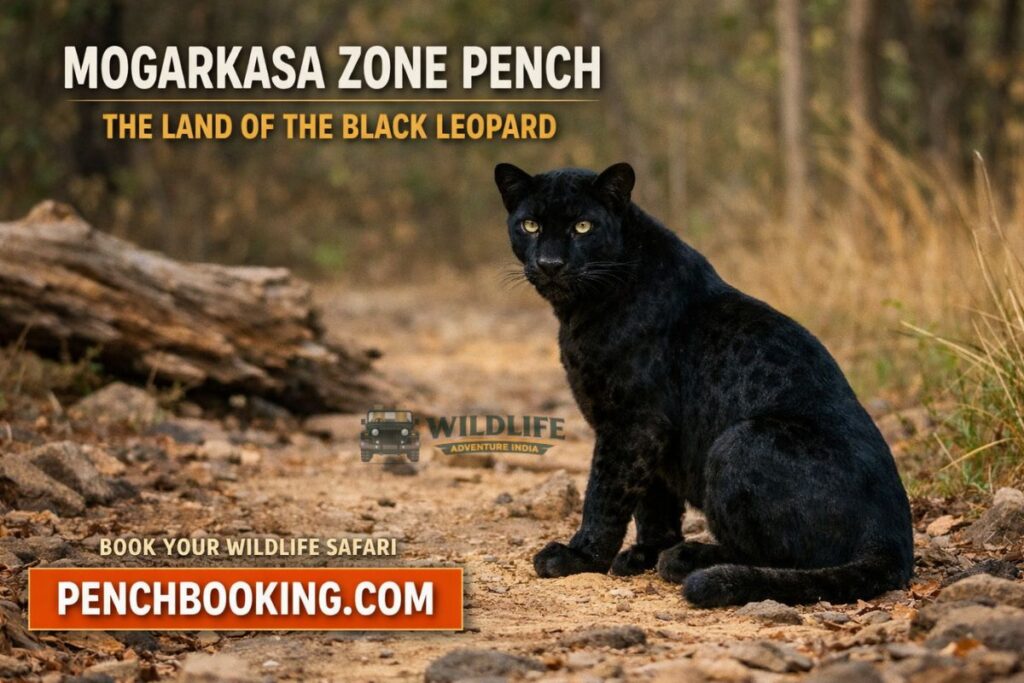
One of the most captivating features of Mogarkasa Zone Pench is the presence of the elusive Black Leopard in Pench. This rare melanistic leopard, with its striking dark coat and hidden rosettes, adds mystery and excitement to the forest, making each Pench buffer zone safari an unforgettable experience for wildlife enthusiasts and photographers alike.
What is a Black Leopard?
A black leopard is not a separate species but a genetic variant of the Indian leopard (Panthera pardus fusca).
The dark coat is due to melanism, a condition that increases melanin pigment. While the coat appears black, rosette patterns are visible under strong light. Such melanistic leopards are rare in central India, making sightings in Mogarkasa exceptionally valuable for wildlife enthusiasts.
Why Mogarkasa?
Unlike dense evergreen forests where black leopards are more common, Mogarkasa’s dry deciduous terrain makes their presence particularly remarkable.
Repeated sightings of the Black Panther in Pench National Park, particularly in this zone, strongly suggest a resident population. Consequently, this has led to Mogarkasa earning the nickname The Land of the Black Leopard, thereby attracting photographers and researchers from across India and even abroad.
Behavior and Habitat Preference
Black leopards in Mogarkasa are primarily nocturnal but can occasionally be spotted during early mornings or late afternoons.
They prefer dense bamboo cover for hunting but are also known to patrol open meadows near waterholes. Observing these creatures in the buffer zone gives a rare glimpse into their stealth and adaptability, far from the more crowded core areas.
Wildlife Diversity in Mogarkasa
While the Black Leopard in Pench steals the spotlight, Mogarkasa hosts a remarkable diversity of wildlife. From tigers and leopards to sloth bears, wild dogs, and various deer species, the area also supports a rich array of birdlife, making every Pench buffer zone safari a comprehensive and immersive wildlife experience.
Mammals
- Leopards: Both melanistic and regular coat individuals
- Royal Bengal Tigers: Occasionally dispersing males visit the buffer zone
- Sloth Bears: Solitary foragers in bamboo and sal forests
- Indian Wild Dogs (Dholes): Seen in packs, mostly early morning
- Gaur and Sambar Deer: Form the primary prey base
- Chital and Nilgai: Frequent sightings near waterholes
Birds
- Crested Serpent Eagle
- Indian Roller
- Peafowl
- Various species of owls and nightjars
- Migratory waterfowl near streams and ponds
This biodiversity makes the Pench buffer zone safari experience holistic, offering more than just tiger or leopard sightings.
Pench Buffer Zone Safari: What to Expect
A Pench buffer zone safari in Mogarkasa offers a unique and intimate wildlife experience compared to core zone drives. Visitors can explore less crowded trails, observe elusive predators like leopards and tigers, and experience the forest’s natural rhythms up close, often increasing chances of rare Black Leopard in Pench sightings.
Jeep Safari
- Small group vehicles (6 passengers) with a forest guide
- Flexibility to move according to wildlife signals
- Best for photography and close observation
Jeep safaris allow visitors to explore hidden tracks, follow pugmarks, and increase the chance of spotting the Black panther in Pench National Park.
Canter Safari
- Larger vehicle accommodating 15–20 people
- Scheduled morning or evening trips
- Suitable for groups or school excursions
Canter safaris offer a more social experience but may have restricted movement compared to jeeps.
Walking Safari
- Conducted in buffer zones only
- Small groups with forest guides
- Educational insights into forest ecology, tracks, and smaller fauna
Walking safaris provide a closer connection with nature, although predator sightings are rarer.
Photography Safari
- Early morning departures for ideal lighting
- Focused routes to improve chances of capturing Pench Black Leopard sightings
- Guided by experienced naturalists for spotting elusive animals
Photography safaris are highly popular due to the unique opportunity to capture a melanistic leopard in a dry deciduous forest.
Best Time to Visit Mogarkasa Zone Pench
The best time to visit Mogarkasa Zone Pench depends on wildlife activity and climate. Winter (October–February) offers pleasant temperatures and lush greenery, while summer (March–June) increases predator visibility near waterholes, enhancing chances of spotting tigers, leopards, and even the rare Black Leopard in Pench.
Winter (October–February)
- Cool and comfortable climate
- Dense greenery from post-monsoon
- Moderate predator activity
Winter is ideal for leisurely safaris, birdwatching, and photography but may slightly reduce visibility for spotting leopards.
Summer (March–June)
- Dry vegetation and limited water sources
- Increased predator concentration near waterholes
- Higher probability of Pench Black Leopard sightings
Summer is considered the best time for wildlife photography and active predator movement.
How to Plan Your Visit to Mogarkasa
Safari Booking
- Reserve Your Safari Slots in Advance – Book your morning or evening safari directly through pench booking online to secure your preferred time.
- Book your morning or evening safari directly through our website to secure your preferred time.
- Plan Your Safari Early – Popular slots fill up fast, so schedule your visit ahead to avoid disappointment.
- Carry Required Documents – Bring a valid ID and your confirmed safari permit from our platform for a smooth entry.
Accommodation
- Eco-lodges and forest rest houses near Mogarkasa
- Private resorts supporting responsible tourism
- Selecting lodging near buffer zones reduces travel time for early morning safaris
Travel Tips
- Wear neutral-colored clothing to blend with the forest
- Maintain silence and avoid sudden movements
- Carry binoculars, camera with zoom lens, and drinking water
- Prefer experienced guides to track alarm calls, pugmarks, and predator movement
Conservation Significance of Mogarkasa Buffer Zone
The Mogarkasa Buffer Zone is not just a tourist attraction; it serves as a vital wildlife corridor, protecting rare species like tigers and leopards, maintaining ecological balance, reducing human-wildlife conflict, and supporting sustainable tourism that benefits both conservation and local communities.
Habitat Protection
Buffer zones like Mogarkasa are essential for habitat protection, acting as a transitional area between human settlements and core forests. They minimize human-wildlife conflicts, prevent habitat degradation, safeguard breeding and feeding grounds, and ensure that predators such as tigers and leopards can move and hunt safely.
Supporting Predator Dispersal
Young tigers and leopards move between core forest areas. This movement prevents inbreeding, maintains healthy genetic diversity, reduces territorial conflicts, and ensures long-term survival of predator populations while sustaining the ecological balance of the Pench Tiger Reserve Maharashtra side.
Sustainable Tourism
Revenue from safari permits and eco-friendly lodges funds forest protection, anti-poaching measures, and habitat maintenance, while simultaneously providing livelihoods to local communities, creating a harmonious balance between humans and wildlife.
While exploring the wilderness of Mogarkasa Zone Pench, don’t miss the chance to learn about local culture and lesser-known spots in the park. Check out this guide to Local Culture and Hidden Places in Pench National Park for an unforgettable adventure beyond the safari trails!
Frequently Asked Questions (FAQs)
It is renowned for repeated Pench Black Leopard sightings, making it one of the rare buffer zones where melanistic leopards are regularly reported.
No sightings are guaranteed in the wild, but Mogarkasa has consistently recorded melanistic leopard activity, making it one of the best places to try.
No, it is part of the Mogarkasa Buffer Zone, which is managed for both conservation and controlled tourism.
Apart from leopards, tigers, and black panthers, the zone hosts sloth bears, dholes, gaurs, sambar, chital, and a variety of bird species.
Summer months (March–June) provide the best chances for predator sightings, including the Black Leopard in Pench.
Conclusion
Mogarkasa Zone Pench is, without a doubt, a hidden jewel in the Pench Tiger Reserve on the Maharashtra side. The area attracts serious wildlife enthusiasts and photographers and nature lovers because its unique ecology and rare melanistic leopard sightings and diverse wildlife make it an ideal wildlife viewing destination.
A Pench buffer zone safari here offers an intimate, less crowded experience compared to core zones. Whether you are hoping to spot the elusive Black panther in Pench National Park, photograph wildlife in pristine conditions, or simply enjoy the serenity of a dry deciduous forest, Mogarkasa promises memories that last a lifetime.