
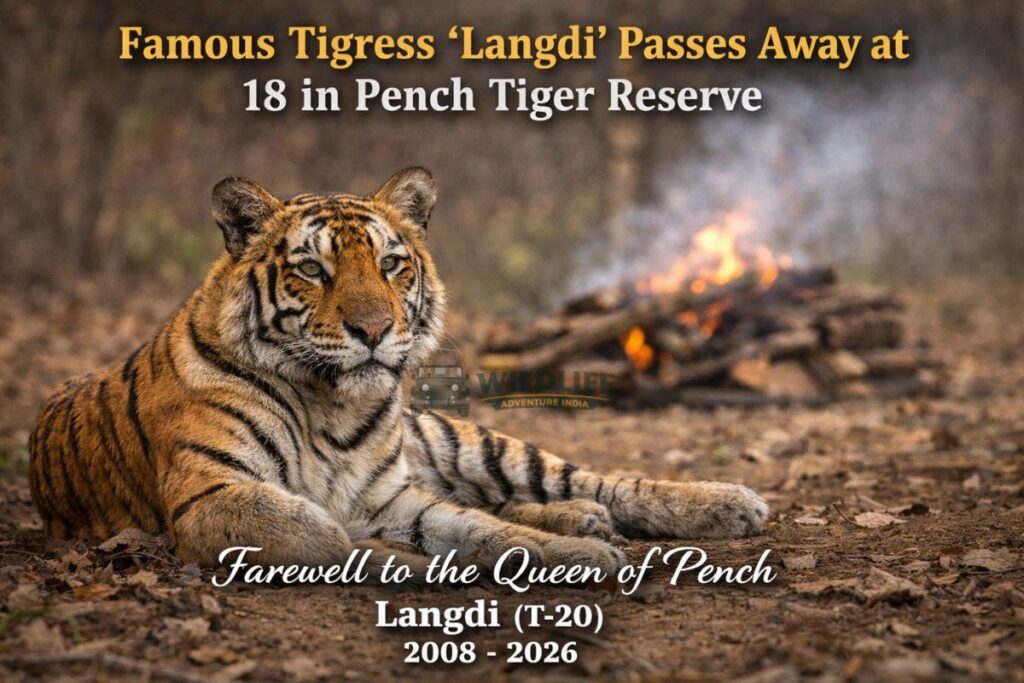
Famous tigress Langdi (T-20), one of the most recognised big cats of Pench Tiger Reserve, has died at the age of 18, forest officials confirmed. The tigress was known among wildlife enthusiasts, forest staff, and safari visitors for her remarkable survival story, as she lived and hunted in the wild despite walking with a noticeable limp.
According to officials from the Madhya Pradesh forest department, the tigress was found dead on 7 March 2026 near Munara Camp in the Karmajhiri at around 10:30 am (IST) on Saturday
of the reserve. She had reportedly been spotted by tourists during a safari on 6 March, just a day before her death. After the carcass was discovered, the forest department conducted a post-mortem examination following the guidelines of the National Tiger Conservation Authority (NTCA). Officials later performed the last rites of the tigress inside the reserve as per the standard wildlife protocols.
Langdi became widely known in Pench because of a congenital deformity in one of her front legs, which caused her to walk with a limp. This condition led forest guards and locals to nickname her “Langdi,” meaning “the limping one.” Despite this physical limitation, she managed to survive in the competitive jungle environment and successfully hunted prey for many years, making her an example of resilience in the wild. Her story often impressed tourists and wildlife photographers who visited the reserve hoping to see the famous tigress.
Forest officials also noted that Langdi was among the oldest tigresses recorded in the Pench landscape. Tigers in the wild generally live around 12 to 15 years, but she survived for nearly 18 years, which is considered a long lifespan for a wild tiger. Because of this, she was regarded as one of the senior tigresses in the region and had become a familiar presence in the Karmajhiri tourism zone.
During her lifetime, Langdi also played a significant role in strengthening the tiger population of Pench. Officials said she gave birth to around 10 cubs across multiple litters. Many of her cubs later grew up and established territories within and around the reserve, contributing to the healthy tiger population that Pench is known for today. Through her offspring, her genetic lineage continues in the forest landscape.
In her final years, Langdi had become physically weak due to age, and forest authorities believe her death occurred due to natural causes linked to old age. The passing of the tigress has saddened wildlife lovers and regular safari visitors who had followed her story for many years. Forest staff who monitored her movements also remembered her as one of the most iconic tigresses of the reserve.
Langdi’s life remains a powerful example of survival in the wild. Even with a physical disability, she managed to live a long life, raise cubs, and contribute significantly to the tiger population of Pench. Her legacy will continue through the generations of tigers that now roam the forests of Pench Tiger Reserve.